
Bonded Warehousing for UK Importers: What You Need to Know
What Is Bonded Warehousing?
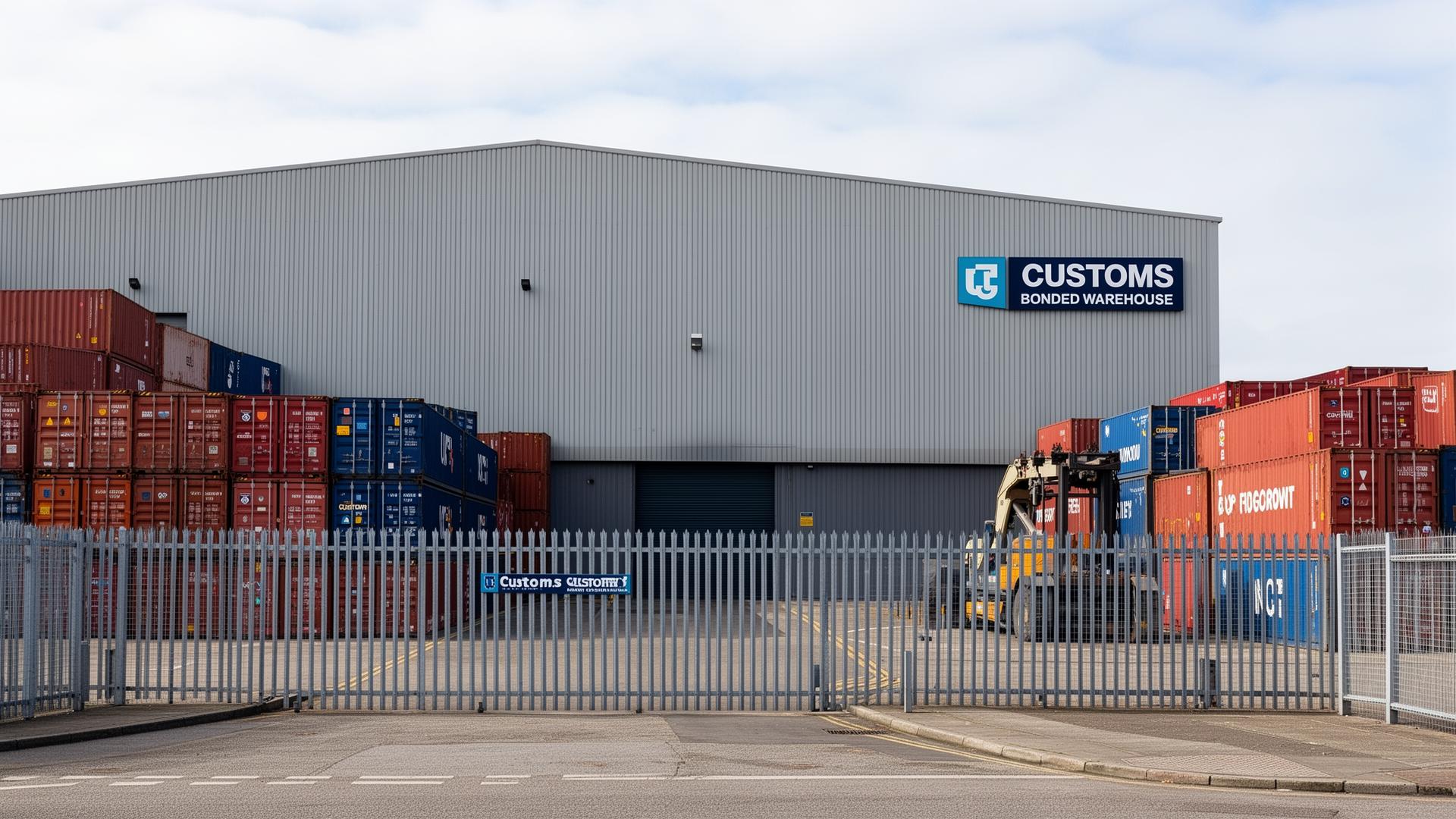
A bonded warehouse is a facility authorised by HMRC where imported goods can be stored without paying customs duty or import VAT until the goods are released for sale or distribution in the UK.
For importers, this offers significant cash flow advantages — you only pay duty and VAT when goods leave the bonded facility, not when they arrive in the UK.
How It Works
- Goods arrive at a UK port (e.g., Felixstowe, Southampton, London Gateway)
- Transported under bond to the bonded warehouse
- Stored duty-free for as long as needed
- Duty and VAT paid only when goods are removed for UK distribution
- Re-exported goods leave without any UK duty being paid
The Cash Flow Benefit
Consider an importer bringing in £500,000 worth of goods:
| Scenario | Duty (5%) | VAT (20%) | Total Due | When Payable |
|---|---|---|---|---|
| Standard warehouse | £25,000 | £100,000 | £125,000 | On import |
| Bonded warehouse | £25,000 | £100,000 | £125,000 | On release |
If goods sit in storage for 3 months before selling, bonded warehousing defers £125,000 of payments by 3 months. At typical business borrowing rates, that's a meaningful saving.
Additional Benefits
- Partial releases — release only what you need, when you need it
- Re-export without duty — if goods are shipped to non-UK destinations
- Reduced risk — if goods are damaged or destroyed in bond, you may not owe duty
- Quality inspection before committing to duty payment
Who Benefits Most?
Bonded warehousing makes financial sense when:
- Import values are high — the duty/VAT deferral is substantial
- Stock turns slowly — goods sit for weeks or months before selling
- You re-export some goods — avoid UK duty entirely on those shipments
- Cash flow is tight — deferring six-figure tax payments eases working capital pressure
It's less beneficial for:
- Low-value imports where the deferral is small
- Fast-moving stock that sells within days of arrival
- Goods with zero-rate duty (though VAT deferral still applies)
Compliance Requirements
Operating or using a bonded warehouse involves:
- HMRC authorisation — the warehouse must hold a valid bond
- Customs entries — goods must be properly declared on entry and exit
- Record keeping — detailed inventory records for HMRC inspection
- Security standards — the facility must meet HMRC physical security requirements
- AEO status — helpful though not mandatory; speeds up processes
Bonded vs Duty Deferment Account
An alternative to bonded warehousing is a Duty Deferment Account (DDA), which allows you to delay duty payments by approximately one month. Compare:
| Feature | Bonded Warehouse | Duty Deferment Account |
|---|---|---|
| Deferral period | Until release | ~30 days |
| Guarantee required | Warehouse bond | Bank guarantee |
| Flexibility | Pay per release | Monthly settlement |
| Best for | Slow-moving/high-value | Fast-moving/regular |
Many importers use both — DDA for regular fast-moving lines and bonded storage for slower or higher-value inventory.
Choosing a Bonded Warehouse Provider
Ask potential providers:
- Are you HMRC-authorised for bonded storage?
- What customs brokerage support do you offer?
- Can you handle partial releases?
- What are your storage rates for bonded vs standard space?
- Do you have experience with your product category?
At The Fulfilment Centre, our warehousing solutions include options for importers seeking duty management. Contact us to discuss your specific requirements.
Importing to the UK? Explore our import services or get a quote to discuss bonded storage options.
Ready to Optimise Your Fulfilment?
Speak to The Fulfilment Centre Ltd about improving your UK fulfilment.
Get a Quote