
Cross-Docking vs Traditional Warehousing: Which Is Right for You?
What Is Cross-Docking?
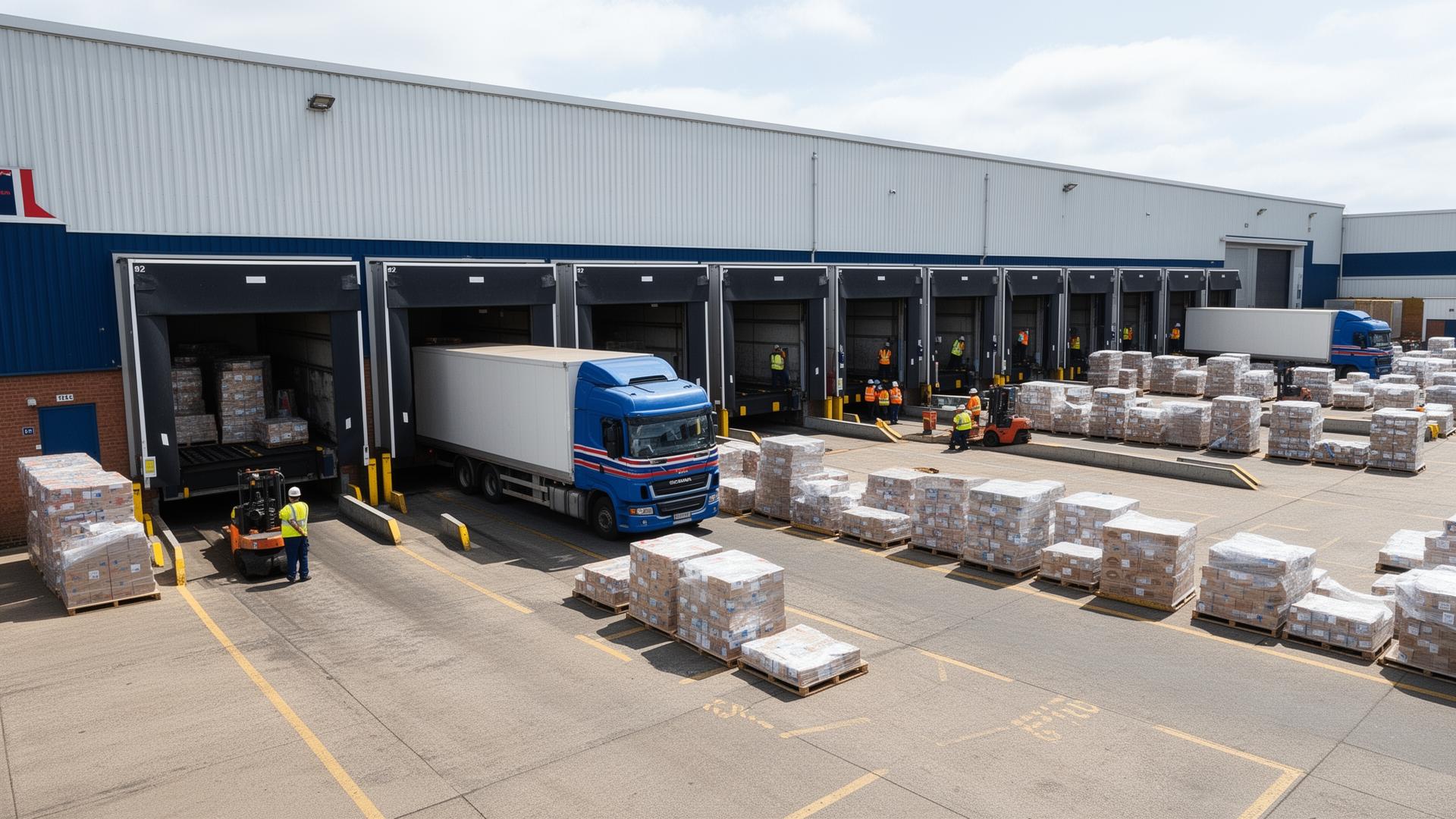
Cross-docking is a logistics strategy where inbound goods are unloaded, sorted, and immediately loaded onto outbound vehicles — with minimal or no storage in between. The goods "cross" the dock rather than entering the warehouse.
This contrasts with traditional warehousing, where goods are received, stored in racking or shelving, and picked when orders arrive.
How Cross-Docking Works
- Inbound goods arrive — typically from suppliers or ports
- Goods are sorted by destination, customer, or order
- Immediately loaded onto outbound vehicles
- Shipped within hours rather than days or weeks
The entire process typically takes 24 hours or less. There's no putaway, no pick process, and no long-term storage.
When Cross-Docking Makes Sense
Cross-docking works best when:
- Goods are pre-allocated — you already know where they're going before they arrive
- High throughput, low variety — you're moving pallets or cases, not individual items
- Time-sensitive products — perishables, fashion, or promotional stock
- Consolidated shipments — combining multiple supplier deliveries into full loads
Ideal Use Cases
- Retailer distribution (supplier → DC → stores)
- Import consolidation (port → sort → regional delivery)
- Seasonal promotions with pre-sold stock
- Hub-and-spoke B2B distribution
When Traditional Warehousing Is Better
Traditional warehousing remains the right choice when:
- Orders are unpredictable — you don't know what will sell or when
- SKU variety is high — ecommerce brands with hundreds or thousands of products
- Items need processing — labelling, kitting, quality checks
- Buffer stock is essential — you need safety stock to handle demand spikes
| Factor | Cross-Docking | Traditional Warehousing |
|---|---|---|
| Storage time | Hours | Days to months |
| Storage cost | Minimal | Per-pallet/bin charges |
| Handling cost | Lower (fewer touches) | Higher (putaway + pick) |
| Flexibility | Low (pre-planned) | High (on-demand picking) |
| SKU range | Low–medium | Any |
| Order type | Bulk/pallet | Individual items |
| Technology needs | High (coordination) | Moderate (WMS) |
The Hybrid Approach
Many businesses benefit from combining both models:
- Fast-moving A items: Cross-dock from supplier to customer
- Slower B/C items: Store traditionally and pick to order
- Seasonal stock: Cross-dock during peak, store during off-peak
This hybrid approach reduces storage costs on predictable, high-volume lines while maintaining flexibility for everything else.
Operational Requirements
Cross-docking requires:
- Advanced planning — you need to know inbound and outbound schedules in advance
- Dock capacity — sufficient loading bays for simultaneous in/out operations
- Strong coordination — tight communication with suppliers and carriers
- Technology — transport management systems and real-time visibility
Without these capabilities, cross-docking can create more problems than it solves.
Cost Comparison
For a business moving 50 pallets per week:
| Cost Component | Cross-Docking | Traditional |
|---|---|---|
| Storage | £0 | £200–£250/week |
| Handling (in + out) | £300 | £400–£500 |
| Transport (may differ) | £800 | £600–£800 |
| Weekly total | £1,100 | £1,200–£1,550 |
Cross-docking saves money when goods flow predictably. But if plans change and goods need storing after all, emergency storage costs can quickly erode those savings.
Making the Right Choice
Consider cross-docking if your supply chain is predictable and your goods are pre-allocated. Choose traditional warehousing if you need flexibility and serve unpredictable demand. Most growing businesses benefit from a hybrid approach.
At The Fulfilment Centre, we offer both cross-docking and traditional storage across our UK depot network, helping you optimise for cost and speed.
Need help choosing? Contact our team to discuss the right model for your business.
Ready to Optimise Your Fulfilment?
Speak to The Fulfilment Centre Ltd about improving your UK fulfilment.
Get a Quote