
Dropshipping vs 3PL Fulfilment: Which Model Suits Your Business?
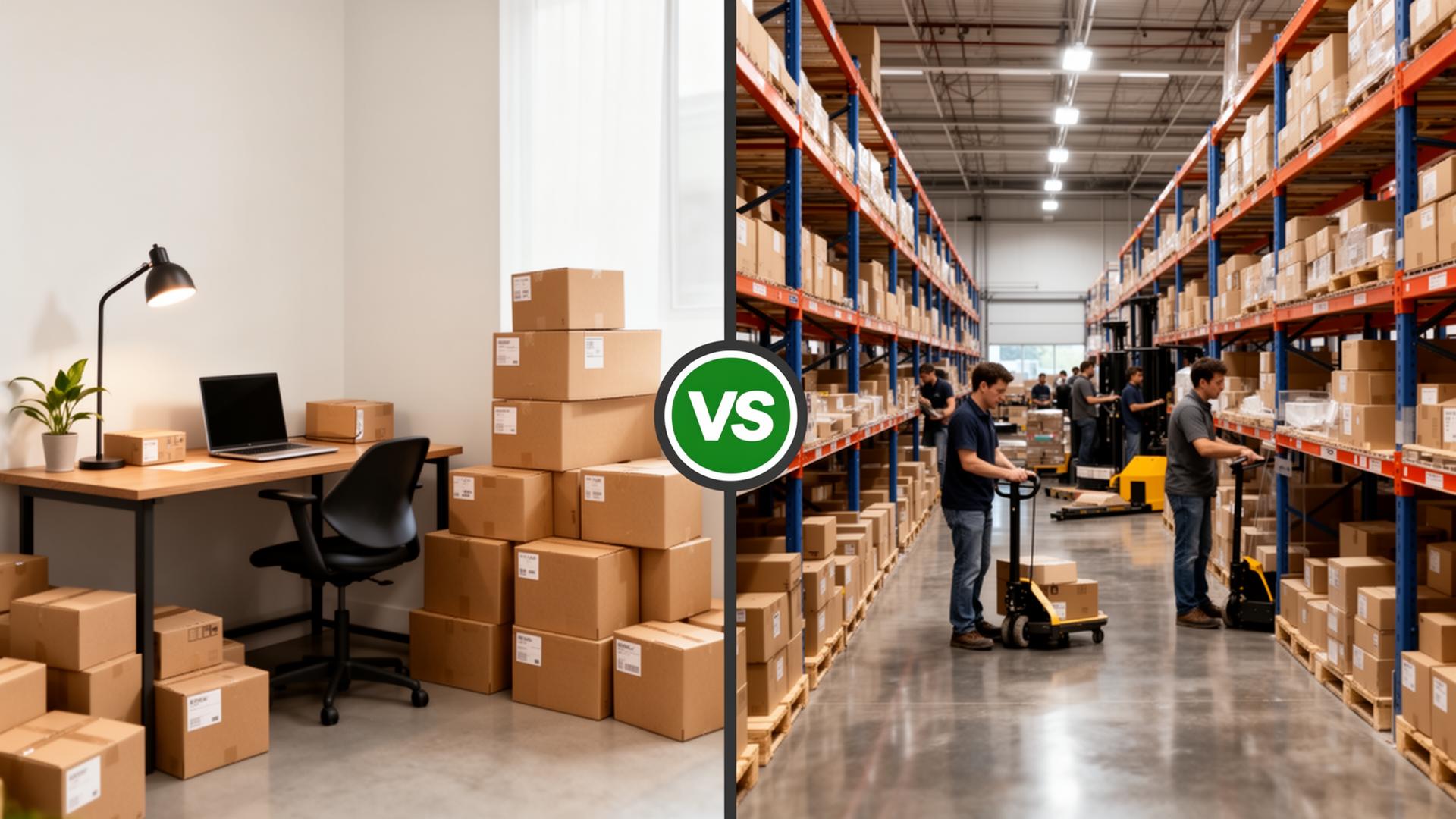
Two Models, Very Different Trade-Offs
Dropshipping and 3PL fulfilment both let you sell products without running your own warehouse. But they differ dramatically in control, margins, and customer experience.
How Each Model Works
Dropshipping
- Customer places an order on your website
- You forward the order to your supplier
- Supplier ships directly to the customer
- You never touch the product
3PL Fulfilment
- You purchase inventory and send it to your 3PL's warehouse
- Customer places an order
- The 3PL picks, packs, and ships from your stock
- You own the inventory throughout
The Comparison
| Factor | Dropshipping | 3PL Fulfilment |
|---|---|---|
| Upfront investment | Very low | Moderate (inventory) |
| Product margins | Low (15–30%) | Higher (40–60%) |
| Delivery speed | Slow (7–21 days from Asia) | Fast (next-day UK) |
| Branding/packaging | None or minimal | Full control |
| Quality control | None | You inspect before sending to 3PL |
| Returns | Complex (ship back to supplier?) | Handled by 3PL |
| Scalability | Easy to add products | Requires inventory investment |
| Customer experience | Poor–average | Good–excellent |
When Dropshipping Works
Dropshipping makes sense when:
- You're testing a market before committing to inventory
- Margins are high enough to absorb supplier pricing
- Delivery speed isn't critical (some niches tolerate 7–14 day delivery)
- You're selling customised or made-to-order products
- Capital is limited and you can't fund inventory
When to Move to 3PL
The transition typically happens when:
- Customers demand faster delivery — UK next-day is the expectation
- Return rates are high — dropshipping returns are a nightmare
- Margins are squeezed — buying in bulk improves your cost per unit
- Brand experience matters — you want custom packaging and inserts
- Volume justifies it — 50+ orders/day makes 3PL economics work
The Transition Process
- Identify your best sellers — start with proven products, not your entire range
- Order initial stock — 4–8 weeks of inventory based on sales data
- Choose a fulfilment provider — visit facilities, test with a trial
- Set up integration — connect your sales channels to the 3PL's WMS
- Run in parallel — fulfil best sellers via 3PL, keep long-tail on dropship
- Gradually migrate — move more SKUs as confidence and volume grow
Hybrid Models
Many successful brands run both models simultaneously:
- Core range: Held at 3PL for fast UK delivery
- Extended range: Dropshipped for wider product selection
- New products: Dropship to test, then stock winners at 3PL
This hybrid approach balances capital efficiency with customer experience.
Cost Comparison Example
For a product with a £30 retail price:
| Cost | Dropshipping | 3PL |
|---|---|---|
| Product cost | £18 | £12 (bulk) |
| Shipping (to customer) | Included in product cost | £3.50 |
| Storage | £0 | £0.15 |
| Pick & pack | £0 | £1.50 |
| Total cost | £18 | £17.15 |
| Margin | £12 (40%) | £12.85 (43%) |
Plus, the 3PL model gives you next-day delivery, branded packaging, and quality control — all of which improve conversion rates and reduce returns.
At The Fulfilment Centre, we work with brands transitioning from dropshipping to 3PL fulfilment. Our flexible storage options mean you can start small and scale.
Ready to move beyond dropshipping? Contact us to discuss your transition plan.
Ready to Optimise Your Fulfilment?
Speak to The Fulfilment Centre Ltd about improving your UK fulfilment.
Get a Quote