
Why Outsourcing Fulfilment Makes Sense for Growing Ecommerce Brands
The Tipping Point: When Self-Fulfilment Stops Working
Every ecommerce brand starts the same way. You pack orders from your kitchen table, spare room, or garage. It works when you are shipping 5 or 10 parcels a day. But there comes a point — usually somewhere between 50 and 200 orders per day — where self-fulfilment becomes the thing holding your business back.
You are spending more time packing boxes than developing products, marketing, or building customer relationships. Mistakes creep in. Late dispatches increase. Your living space looks like a warehouse. Sound familiar?
This guide explains why outsourcing to a professional fulfilment provider makes sense for growing brands, what it involves, and how to make the transition without disrupting your customers.
The Real Cost of Self-Fulfilment
Before dismissing outsourcing as too expensive, consider what self-fulfilment actually costs when you account for everything:
- Your time — as the founder, your time is your most valuable resource. Every hour spent packing is an hour not spent growing the business.
- Staff costs — if you have hired packers, factor in wages, National Insurance, holiday pay, and management time.
- Space costs — rent for a warehouse, unit, or storage space. Business rates and utilities.
- Materials — boxes, tape, void fill, labels, branded packaging.
- Technology — shipping software, barcode scanners, label printers.
- Carrier accounts — as a small shipper, you pay higher per-parcel rates than a 3PL negotiating on behalf of hundreds of clients.
- Mistakes — mis-picks, wrong addresses, and damaged items all carry direct costs plus the harder-to-quantify cost of unhappy customers.
When you total these up honestly, many brands discover that their true cost per order for self-fulfilment is significantly higher than they assumed — and often more than a professional fulfilment provider would charge.
What a 3PL Actually Does
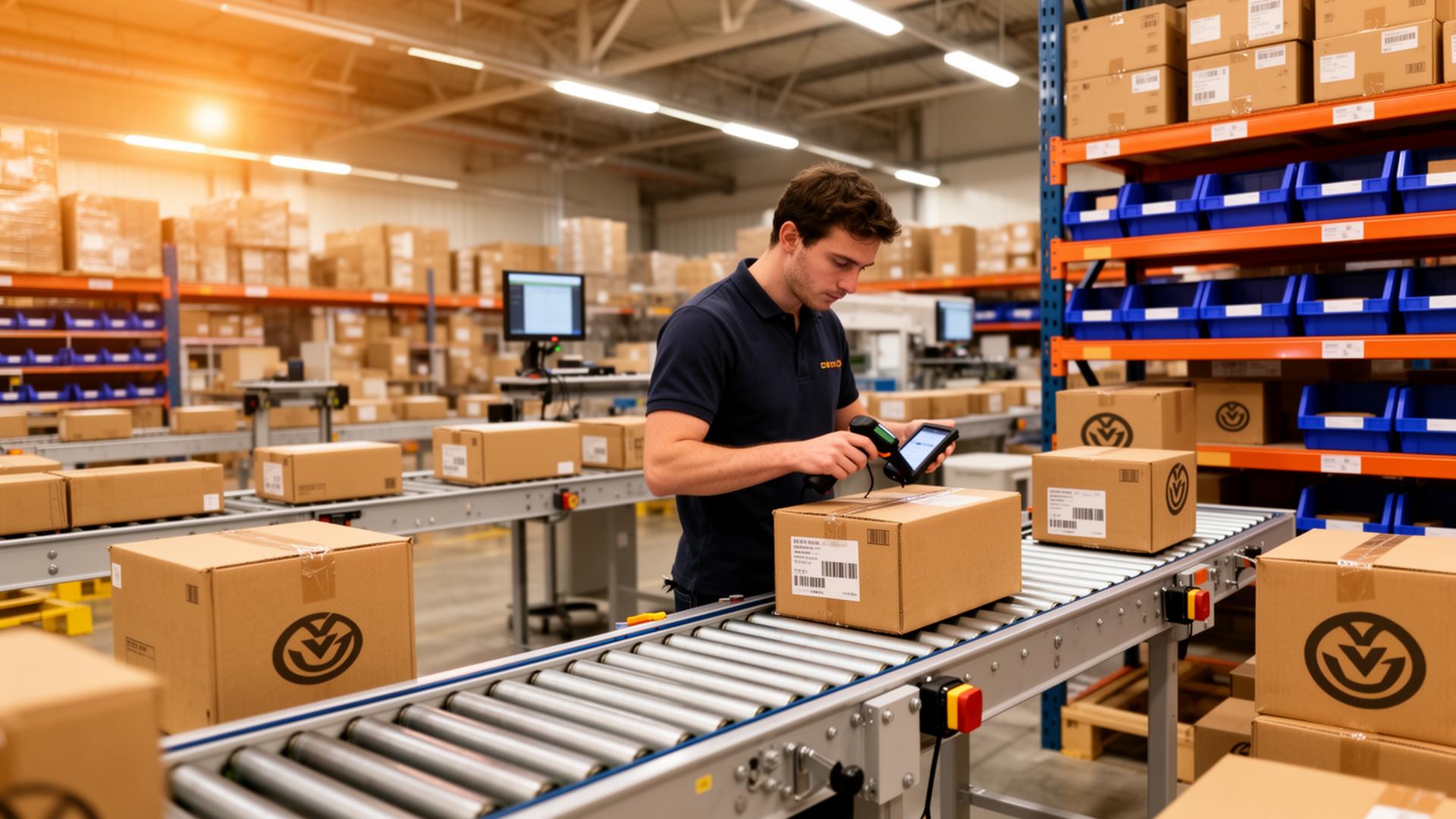
A third-party logistics provider (3PL) handles the physical storage and dispatch of your products. Here is what that typically includes:
- Receiving — your stock is delivered to the warehouse, checked in, and stored
- Storage — goods are held in racking, shelving, or bins within a secure, insured facility
- Picking — when an order comes in, the correct items are picked from storage
- Packing — items are packed into appropriate packaging with any inserts, marketing materials, or branded elements
- Dispatch — parcels are labelled and handed to the carrier for delivery
- Returns — returned items are received, inspected, and either restocked or disposed of
The best providers also offer integration with your ecommerce platform (Shopify, WooCommerce, Amazon, eBay), so orders flow automatically from your store to the warehouse without manual intervention.
The Benefits of Outsourcing
1. Focus on Growth
The most significant benefit is not financial — it is strategic. When you are not spending hours each day in a packing station, you can invest that time in product development, marketing, customer service, and building your brand.
2. Professional Operations
A dedicated warehouse operation picks and packs thousands of orders daily. Their processes, technology, and trained staff deliver higher accuracy and faster dispatch times than most in-house setups.
3. Better Carrier Rates
3PLs ship high volumes and negotiate accordingly. You benefit from their carrier relationships without needing to meet volume thresholds yourself, often achieving significant savings on shipping costs compared to retail carrier rates.
4. Scalability
Peak season, a viral social media post, or a successful product launch can multiply your order volume overnight. A 3PL has the staff, space, and systems to absorb these spikes. Your garage does not.
5. Reduced Overheads
No lease, no business rates, no forklift maintenance, no packing staff. Your warehousing cost becomes a variable expense that scales with your order volume rather than a fixed monthly overhead.
What Does Outsourced Fulfilment Cost?
Pricing varies by provider, but a typical UK 3PL structures charges around these core components:
- Storage — charged per pallet per week or per shelf location, varying by facility location and contract length
- Pick and pack — charged per order, with an incremental fee per additional item
- Receiving — charged per pallet or per carton on goods-in
- Management fee — a monthly fee covering account management and system access (some providers include this in handling rates)
- Carrier costs — negotiated volume rates passed through to you
For many brands, total monthly fulfilment costs through a 3PL are comparable to — or less than — the true cost of self-fulfilment.
How to Make the Transition
Step 1: Audit Your Current Operation
Document your current costs, order volumes, SKU count, and any special requirements (branded packaging, kitting, fragile items). This gives potential 3PLs the information they need to quote accurately.
Step 2: Shortlist Providers
Look for providers with experience in your product category, transparent pricing, and a location that makes sense for your customer base. Ask for references and, if possible, visit their warehouse.
Step 3: Start with a Trial
Many providers offer a trial period. Send a portion of your stock and route a percentage of orders through the 3PL while maintaining your own operation as a backup.
Step 4: Integrate Your Systems
Connect your ecommerce platform to the provider's warehouse management system. This should be a straightforward process for established 3PLs — if it feels difficult, that is a warning sign.
Step 5: Transfer Stock and Go Live
Once you are confident in the process, transfer your remaining stock and route all orders through the 3PL. Monitor closely for the first few weeks and establish regular review meetings.
Ready to Outsource Your Fulfilment?
At The Fulfilment Centre, we help growing ecommerce brands transition from self-fulfilment to professional fulfilment operations. With transparent pricing, Shopify and WooCommerce integrations, and flexible storage across multiple UK locations, we make the switch simple.
Every fulfilment operation is different. We provide tailored quotations based on your stock profile, order volume and distribution model.
Ready to Optimise Your Fulfilment?
Speak to The Fulfilment Centre Ltd about improving your UK fulfilment.
Get a Quote