
Short-Term vs Long-Term Warehousing: Which Is Right for Your Business?
Why the Length of Your Storage Commitment Matters
When businesses look for warehouse space in the UK, one of the first decisions they face is whether to commit to short-term or long-term storage. The answer affects not only your monthly costs but also your operational flexibility, cash flow, and ability to respond to market changes.
This guide compares both models, explains when each is appropriate, and helps you decide which approach suits your business.
What Is Short-Term Warehousing?
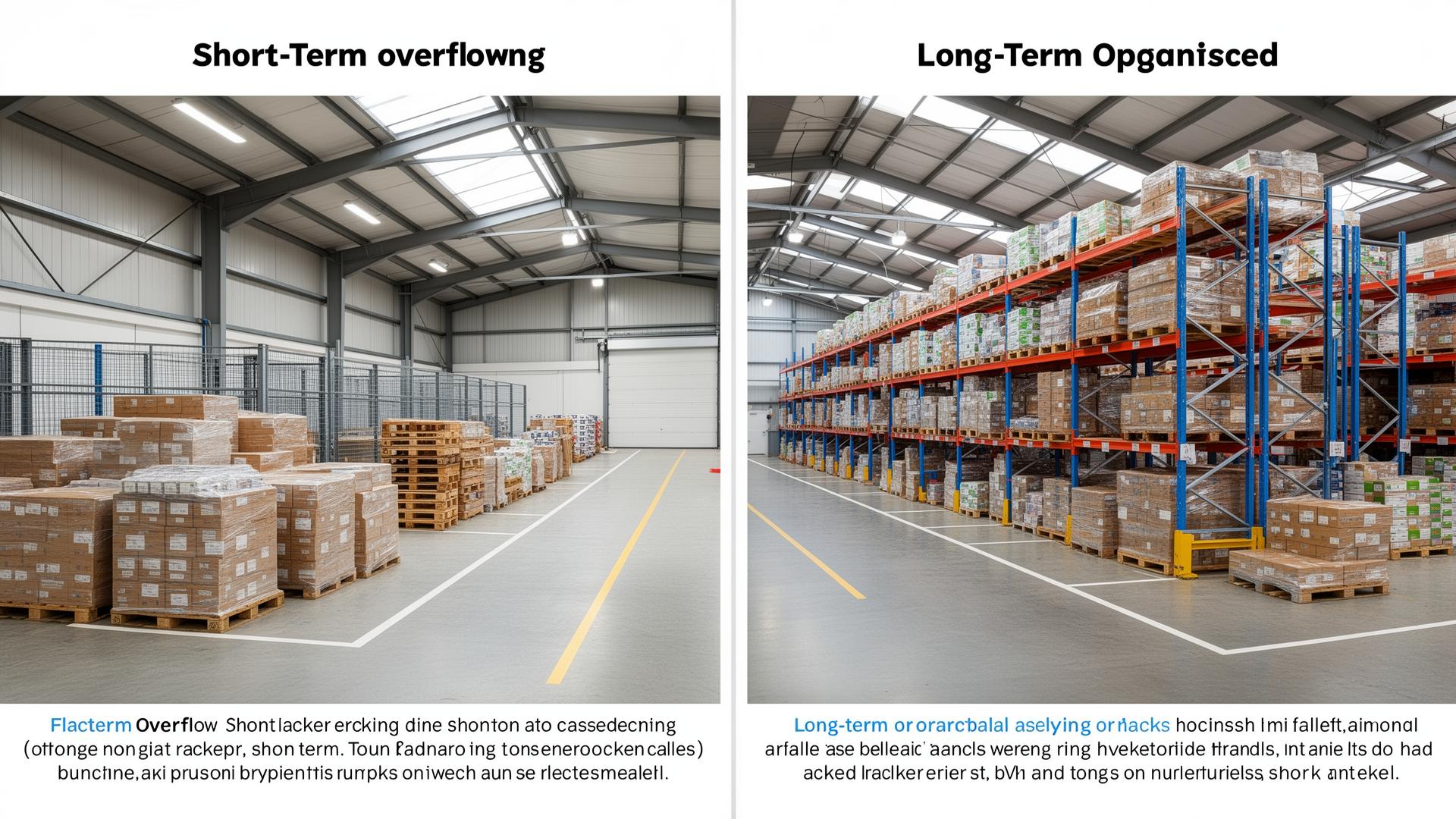
Short-term warehousing refers to storage arrangements that run from a few weeks to six months. There is no rigid industry definition, but the key characteristic is flexibility — you can scale your space up or down without being locked into a lengthy contract.
Common uses for short-term storage:
- Seasonal stock overflow during peak trading periods (Black Friday, Christmas, Easter)
- Temporary holding of imported goods awaiting customs clearance or onward distribution
- Product launches where demand is uncertain
- Business relocations or office moves requiring interim storage
- Project-based inventory for one-off contracts or events
Short-term storage is particularly valuable for importers who receive large container shipments but distribute goods over several weeks. Rather than paying for permanent warehouse space, you only pay for storage during the period your goods are in the facility.
What Is Long-Term Warehousing?
Long-term warehousing involves committing to storage space for six months or more, often on annual contracts with renewal options. This model suits businesses with consistent inventory levels and predictable storage requirements.
Common uses for long-term storage:
- Ongoing stockholding for ecommerce fulfilment operations
- Permanent buffer stock for B2B distribution to retail or wholesale customers
- Archive storage for documents, samples, or legacy products
- Strategic inventory positioning — holding stock close to key customer locations
Long-term contracts typically offer better per-pallet rates than short-term arrangements, reflecting the reduced administrative overhead and guaranteed revenue for the warehouse operator.
Comparing the Two Models
| Factor | Short-Term | Long-Term |
|---|---|---|
| Contract length | Weeks to 6 months | 6 months to 3+ years |
| Per-pallet rate | Higher (£4–£7/week) | Lower (£2.50–£5/week) |
| Flexibility | High — scale up/down freely | Lower — committed to minimum space |
| Notice period | 1–4 weeks | 1–3 months |
| Setup costs | Minimal | May include onboarding/integration fees |
| Best for | Variable demand, seasonal peaks | Consistent, predictable inventory |
When Short-Term Storage Makes Sense
You Import in Bulk but Distribute Gradually
Many importers receive a full container of goods every few months. Short-term storage allows you to unload, store, and distribute without maintaining a permanent warehouse presence.
Your Business Is Seasonal
If 60% of your revenue comes in Q4, it makes little sense to pay for warehouse space year-round. Short-term storage lets you ramp up before peak season and release space afterwards.
You Are Testing a New Market or Product
Launching a new product line? Short-term storage gives you a low-risk way to hold initial stock while you gauge demand, without committing to space you may not need in three months.
You Need Overflow Capacity
Even businesses with permanent warehouse space sometimes need extra capacity. Short-term storage at a secondary location can absorb overflow without disrupting your main operation.
When Long-Term Storage Makes Sense
You Run a Consistent Fulfilment Operation
If you ship 200 to 2,000 orders per day, every day, you need a permanent base. Long-term storage provides the stability and cost predictability that continuous fulfilment operations require.
You Supply Retailers on Ongoing Contracts
Retail supply agreements often run for 12 months or more. You need warehouse space to match, ensuring you can hold sufficient stock to meet replenishment orders throughout the contract period.
You Want the Best Rates
Warehouses reward commitment. A 12-month contract for 100 pallets will almost always secure a better per-pallet rate than a month-by-month arrangement for the same space.
You Need Integrated Systems
Long-term relationships justify the investment in system integration — connecting your ecommerce platform, ERP, or order management system to the warehouse's WMS for automated order processing.
The Hybrid Approach
Many businesses find that a combination of both models works best. A long-term core holding covers your base inventory, while short-term overflow space handles seasonal peaks and ad hoc requirements.
For example, a home goods importer might maintain 80 pallets on a long-term contract year-round, then take an additional 40 pallet spaces on short-term terms from September to January to cover the Christmas peak.
This approach balances cost efficiency with operational flexibility.
What to Ask Your Warehouse Provider
When discussing storage options with a potential warehousing partner, ask:
- What are your minimum commitment periods?
- How much notice do I need to give to increase or reduce space?
- Are there penalties for early termination?
- Can I mix long-term and short-term space within the same facility?
- How does pricing change with different commitment lengths?
- Do you offer reserved space guarantees during peak season?
Choose the Right Storage Model for Your Business
At The Fulfilment Centre, we offer both short-term and long-term warehousing solutions across our UK depot network. Whether you need 10 pallets for a month or 500 pallets on an annual contract, we will tailor a solution that fits your business.
Ready to Optimise Your Fulfilment?
Speak to The Fulfilment Centre Ltd about improving your UK fulfilment.
Get a Quote