
How UK Importers Can Streamline Warehouse-to-Delivery Operations
The Importer's Challenge: From Port to Customer
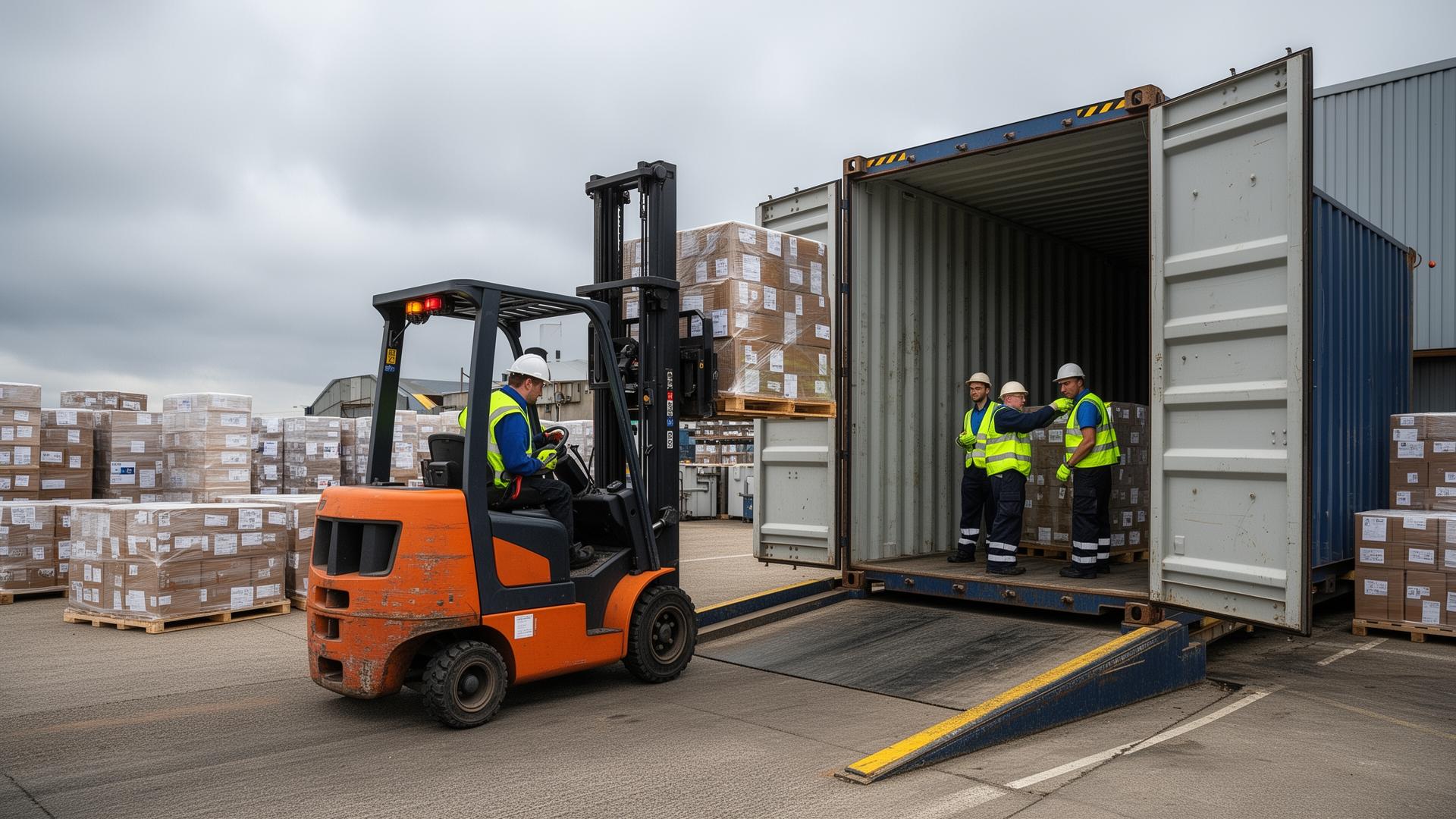
For UK importers, the journey from port to customer involves multiple handoffs, each one an opportunity for delays, errors, and cost overruns. Containers arrive at Felixstowe or Tilbury, goods need devanning, checking, storing, and eventually picking and dispatching to customers — whether that means pallets to retailers or parcels to consumers.
Streamlining this process is not about cutting corners. It is about eliminating waste, reducing handling, and building a supply chain that moves goods from warehouse to customer as efficiently as possible.
Map Your Current Process
Before you can optimise anything, you need to understand your existing workflow in detail. Many importers have never formally documented their goods flow, which means inefficiencies hide in plain sight.
Document each step:
- Container arrives at port
- Haulier collects and delivers to warehouse
- Container devanned and goods checked against packing list
- Goods booked into WMS and put away into storage
- Orders received from customers
- Goods picked, packed, and labelled
- Carrier collects or delivery arranged
- Proof of delivery obtained
- Invoice raised and payment collected
For each step, note the typical time taken, who is responsible, and where delays most commonly occur. This exercise alone often reveals two or three areas where significant time is being lost.
Five Strategies to Streamline Your Operation
1. Reduce the Gap Between Port and Warehouse
The clock starts ticking from the moment your container arrives at port. Demurrage charges (typically £50–£100 per day) accumulate quickly if collection is delayed.
Actions:
- Book haulage in advance, as soon as you have the vessel's estimated arrival date
- Use a warehouse with experience handling container arrivals and the capacity to devan at short notice
- Consider direct port-to-warehouse delivery rather than using an intermediate storage point
- Ensure your warehouse can provide a booking-in reference number that the haulier needs for delivery
2. Streamline Goods-In Processing
The receiving process is where many delays originate. Goods arrive, sit on the dock waiting to be checked, and may not be available for dispatch for days.
Best practices:
- Provide your warehouse with advance shipping documents (packing lists, commercial invoices) before the goods arrive
- Agree standard operating procedures for checking — full count, sample check, or blind receipt depending on supplier reliability
- Use barcode scanning at goods-in to speed up booking and reduce manual data entry errors
- Pre-allocate storage locations in the WMS so put-away can begin immediately after checking
3. Optimise Storage for Speed of Access
How your goods are stored directly affects how quickly they can be picked and dispatched. Poor storage layout means longer pick times, which means higher handling costs and slower order turnaround.
Principles:
- Store fast-moving SKUs in easily accessible, ground-level locations
- Use ABC analysis — your top 20% of SKUs by volume should be in the most accessible positions
- Separate B2B distribution stock (full pallets) from fulfilment stock (individual items) to avoid congestion
- Regularly review and adjust storage allocation as your product mix changes
4. Automate Order Flow
Manual order processing — receiving orders by email, keying them into a system, printing pick lists — is slow, error-prone, and does not scale.
Modern alternatives:
- Integrate your ecommerce platform directly with the warehouse management system for automatic order import
- Use EDI (Electronic Data Interchange) for B2B customers who place regular orders
- Set up automated carrier selection rules based on order value, weight, and delivery postcode
- Implement automated despatch notifications so customers receive tracking information without manual intervention
5. Consolidate Deliveries
If you are shipping multiple small orders to the same region or customer, consolidation can significantly reduce transport costs.
Options:
- Batch orders for the same customer and ship weekly rather than daily
- Use pallet networks for regional consolidation
- Group small consignments heading to the same area onto a single vehicle
- Work with your warehouse to identify consolidation opportunities as part of the daily dispatch process
Measuring Improvement
You cannot manage what you do not measure. Track these key metrics to quantify the impact of your streamlining efforts:
- Port-to-warehouse time — from container arrival at port to goods available in WMS
- Order-to-dispatch time — from order receipt to carrier collection
- Pick accuracy — percentage of orders picked correctly first time
- Cost per order — total warehousing, handling, and transport cost divided by orders shipped
- Stock accuracy — agreement between WMS records and physical stock counts
Set baseline measurements before making changes, then track improvements monthly.
Common Mistakes Importers Make
- Not planning for container surges — if you import seasonally, ensure your warehouse has capacity to receive and process multiple containers in a short period
- Ignoring customs delays — factor potential HMRC holds into your supply chain timeline
- Using the wrong warehouse location — a facility near the port saves on haulage but may be far from your customers, increasing delivery costs
- Treating warehousing as a commodity — the cheapest storage provider is rarely the best value when handling quality, accuracy, and service are factored in
Build a Faster, Leaner Supply Chain
At The Fulfilment Centre, we work with UK importers to design warehouse and distribution operations that minimise handling, reduce costs, and accelerate speed to market. From container devanning to final-mile delivery, we manage the entire chain.
Our transparent pricing means you always know what you are paying, and our multi-depot network ensures your goods are stored in the optimal location for your customers.
Ready to Optimise Your Fulfilment?
Speak to The Fulfilment Centre Ltd about improving your UK fulfilment.
Get a Quote