
Warehouse Automation for Small Businesses: Where to Start
Automation Isn't Just for Amazon
When people think of warehouse automation, they picture robotic arms and autonomous vehicles. But for small and mid-sized businesses processing 50–500 orders per day, automation starts with much simpler — and more affordable — technologies.
The Automation Ladder
Think of automation as a ladder. Start at the bottom and climb as your volume and complexity justify it:
Level 1: Digital Basics
- Barcode scanning — eliminate manual stock counts and picking errors
- Cloud WMS — replace spreadsheets with real-time inventory management
- Label printing — automated shipping labels from your sales channels
- Pick lists — digitally generated, optimised pick routes
ROI: Typically pays for itself within 3–6 months through error reduction alone.
Level 2: Process Automation
- Automated weighing and dimensioning — accurate carrier charging
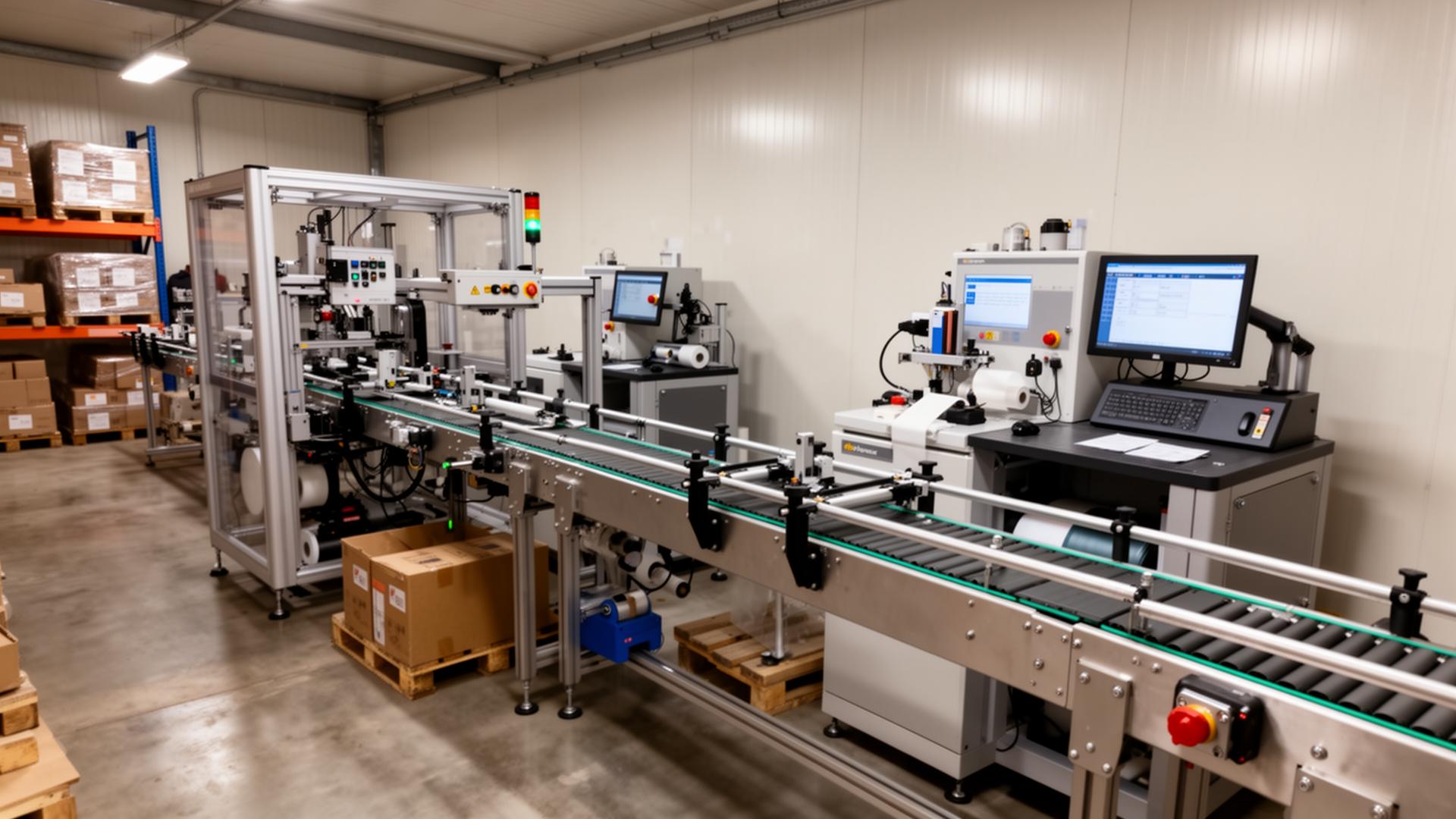
- Conveyor systems — move goods between zones without manual carrying
- Automated label application — print and apply shipping labels at speed
- Batch picking — pick multiple orders in a single warehouse pass
ROI: 6–12 months for operations processing 100+ orders per day.
Level 3: Advanced Systems
- Pick-to-light / put-to-light — visual guidance for faster, error-free picking
- Goods-to-person systems — shelving units that come to the picker
- Automated storage and retrieval — vertical lift modules for small parts
- Robotic palletising — automated pallet building for B2B
ROI: 12–24 months for high-volume operations.
Where to Start
For most small businesses, the highest-impact investments are:
- A proper WMS — this is the foundation everything else builds on
- Barcode scanning — for goods-in, picking, and dispatch verification
- Integrated shipping — automated carrier selection and label generation
These three alone can reduce errors by 80% and increase throughput by 30–50%.
Calculating ROI
For any automation investment, calculate:
| Factor | Measurement |
|---|---|
| Current cost per order | Staff time + errors + returns |
| Projected cost per order | With automation |
| Saving per order | Difference |
| Annual order volume | Multiply by saving |
| Implementation cost | Hardware + software + training |
| Payback period | Cost ÷ annual saving |
The payback period for basic automation (barcode scanning, WMS) is typically measured in months rather than years, driven primarily by the reduction in picking errors and the associated costs of re-shipping and customer service.
The 3PL Alternative
Rather than investing in your own automation, outsourcing to a fulfilment provider gives you access to warehouse technology without the capital expenditure.
A good 3PL already has:
- WMS with multi-channel integration
- Barcode scanning throughout the operation
- Automated carrier selection
- Conveyor systems and efficient layouts
- Trained staff who use the technology daily
This is often the most cost-effective path for businesses that don't want to build and manage their own warehouse infrastructure.
At The Fulfilment Centre, our technology platform provides the automation benefits without the investment.
Interested in technology-led fulfilment? Talk to our team about how our systems can improve your operation.
Every fulfilment operation is different. We provide tailored quotations based on your stock profile, order volume and distribution model.
Ready to Optimise Your Fulfilment?
Speak to The Fulfilment Centre Ltd about improving your UK fulfilment.
Get a Quote