
A Guide to Warehouse Management Systems for Small Businesses
Why Your Warehouse Management System Matters
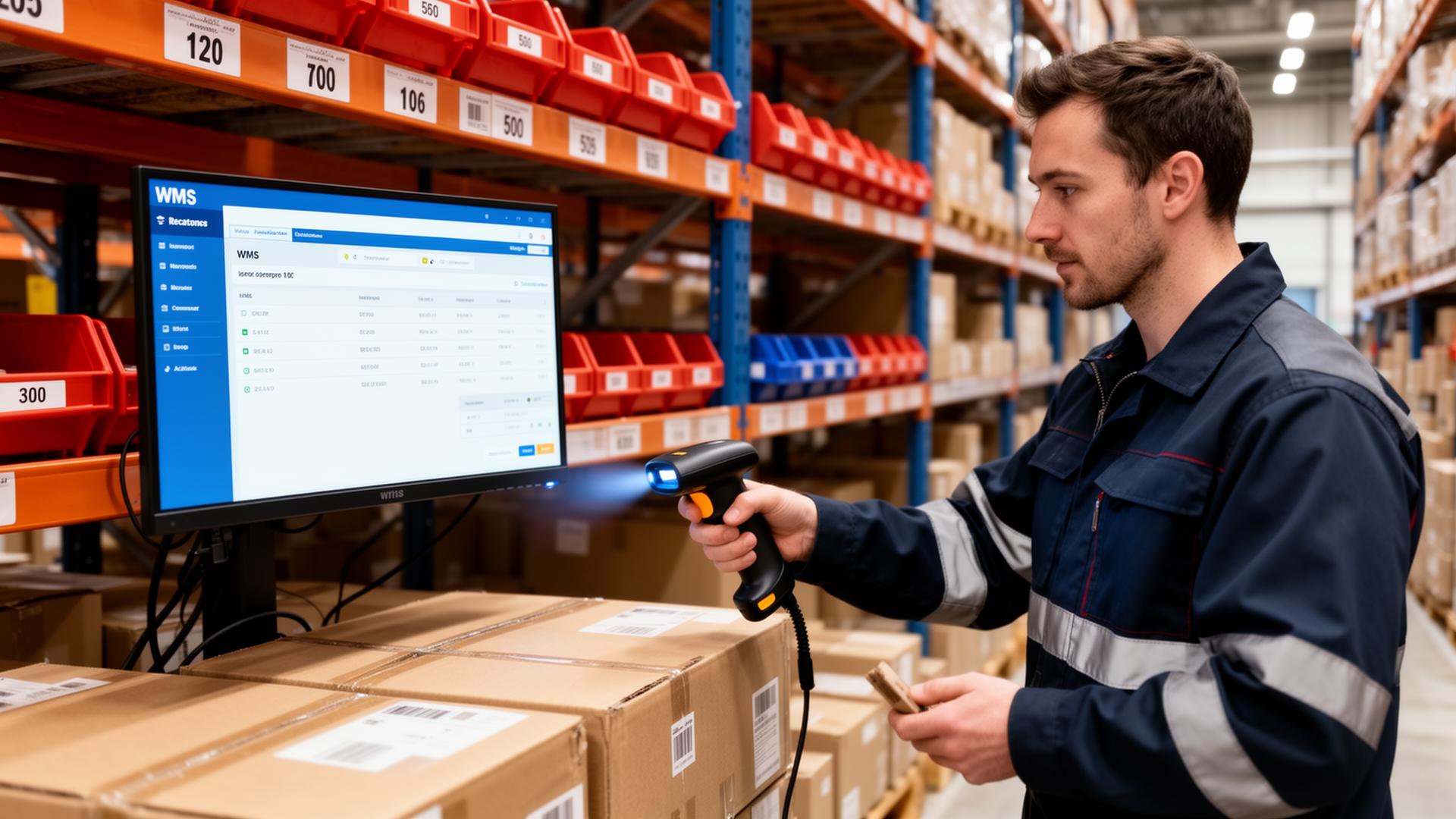
A warehouse management system (WMS) is the software that controls how goods move through a warehouse — from the moment they arrive to the moment they leave on a delivery vehicle. It tracks inventory locations, manages pick lists, records dispatches, and generates the data you need to run your operation efficiently.
For small businesses, the WMS might seem like a back-office concern — something your warehouse provider handles behind the scenes. But the quality of your provider's WMS directly affects your order accuracy, dispatch speed, stock visibility, and ultimately your customers' experience.
What a WMS Does
Inventory Management
The core function of any WMS is knowing exactly what stock you have and where it is stored.
- Location tracking — every pallet, shelf, or bin has a unique identifier. The system records which products are in which locations.
- Real-time updates — as goods are received, moved, picked, or shipped, the system updates immediately.
- Batch and expiry tracking — for products with shelf lives, the WMS manages first-in-first-out (FIFO) rotation automatically.
- Stock counts — the system facilitates cycle counting and full stocktakes, highlighting discrepancies.
Order Processing
When a customer places an order, the WMS manages the workflow:
- Order received (imported from ecommerce platform or entered manually)
- Pick list generated (optimised route through the warehouse)
- Items picked and scanned (barcode verification at each step)
- Items packed and labelled
- Carrier collection arranged
- Tracking information sent to the customer
Reporting
A good WMS provides:
- Stock level reports (current holding by SKU)
- Ageing reports (how long each product has been in storage)
- Order performance metrics (accuracy, dispatch times)
- Cost analysis (storage, handling, transport per order)
Why It Matters for Small Businesses
Accuracy
Without a WMS, warehouses rely on manual processes — paper pick lists, handwritten stock records, visual identification of products. Manual processes produce errors.
The difference:
- Manual operation: 95–97% pick accuracy (3–5 errors per 100 orders)
- WMS with barcode scanning: 99.5–99.9% accuracy (less than 1 error per 200 orders)
At 500 orders per month, the difference is between 15–25 errors and 1–3 errors. Each error costs £8–£15 in re-shipping, customer service time, and lost goodwill.
Speed
A WMS optimises pick paths, batches similar orders together, and automates label printing. This means faster order processing and earlier dispatch, which translates to earlier delivery for your customers.
Visibility
As a business owner, you need to know what stock you have, what is selling, and when to reorder. A provider whose WMS gives you portal access or automated reports empowers you to make better decisions.
Scalability
Spreadsheet-based stock management works at 50 orders per month. At 500, it becomes unreliable. At 5,000, it is impossible. If your fulfilment provider's WMS is robust, your operation can scale without the technology becoming a bottleneck.
What to Look for in Your Provider's WMS
When evaluating a warehousing or fulfilment partner, ask about their WMS:
Essential Features
- Barcode scanning at goods-in, picking, and dispatch
- Real-time stock levels accessible via a client portal
- Ecommerce platform integration (Shopify, WooCommerce, Amazon)
- Automated order import and tracking updates
- Multi-carrier support with automated label generation
Desirable Features
- Mobile access (view stock and orders from your phone)
- Automated reorder alerts
- Returns processing workflow
- Batch and serial number tracking
- Multi-site inventory view (if using multiple locations)
- API access for custom integrations
Red Flags
- No barcode scanning — reliance on visual product identification
- Manual stock records — spreadsheets updated periodically rather than in real time
- No client portal — you cannot see your own stock without requesting a report
- No integration capability — orders must be emailed or keyed in manually
WMS and Cost Control
A good WMS does not just improve accuracy and speed — it helps control your pricing and costs:
- Storage optimisation — the system identifies slow-moving stock that could be consolidated or removed, freeing up pallet positions
- Pick efficiency — optimised pick paths reduce the time (and therefore cost) per order
- Error reduction — fewer mis-picks means fewer re-ships and returns
- Carrier selection — automated rules choose the most cost-effective carrier for each order
Do You Need Your Own WMS?
If you use a 3PL, you typically use their WMS rather than providing your own. This is one of the major advantages of outsourcing — you benefit from enterprise-grade warehouse technology without the capital investment.
A standalone WMS licence costs:
- Entry level: £5,000–£15,000 per year
- Mid-range: £15,000–£50,000 per year
- Enterprise: £50,000+ per year
Plus implementation, training, and ongoing support costs. For most small businesses, accessing this capability through a 3PL's existing system is far more cost-effective.
Questions to Ask Your Provider
- What WMS do you use, and how long have you used it?
- Can I access a client portal to view my stock and orders?
- Do you use barcode scanning at every stage?
- Which ecommerce platforms do you integrate with?
- How are stock reports generated and delivered?
- What is your documented pick accuracy rate?
- Can the system handle returns processing?
- Is there an API for custom integration?
Get the Technology Without the Investment
At The Fulfilment Centre, our WMS provides real-time stock visibility, barcode-verified picking, and seamless ecommerce integration — all included as part of our warehousing and fulfilment service. You get enterprise-level technology at a fraction of the cost of running it yourself.
Ready to Optimise Your Fulfilment?
Speak to The Fulfilment Centre Ltd about improving your UK fulfilment.
Get a Quote